Why Case Management Still Breaks at Scale
Inbox-led workflows and scattered documents continue to slow progress and...


In collaboration with multi-disciplinary rehab teams across health, insurance, and legal services, Oria CM explored how complex rehabilitation cases are currently coordinated — and where fragmentation most often occurs.
The findings reflect responses from professionals managing long-term, multi-stakeholder rehab cases, where information, decisions, and accountability are frequently distributed across disconnected systems.
Over 80% of the respondents were senior practitioners and decision-makers involved in complex rehabilitation coordination.
- Case Managers 39.5%
- Clinical Leads 11.6%
- Occupational Therapists 32.6%
- Physiotherapists 4.7%
- Legal or Insurance Coordinators 4.7%
- Other Specialist Roles 4.7%
The study highlights recurring operational friction points across clinical, administrative, and outcome reporting workflows.
The Burden of Case Coordination
Almost every complex rehab case involves multiple providers, evolving goals, and time-sensitive decisions. Yet most teams still rely on fragmented tools — emails, spreadsheets, PDFs, and disconnected clinical notes.
This fragmentation increases cognitive load, slows decisions, and introduces risk. Critical information is often duplicated, outdated, or inaccessible to the people who need it most at the right moment.

Visibility Gaps Across the Rehab Journey
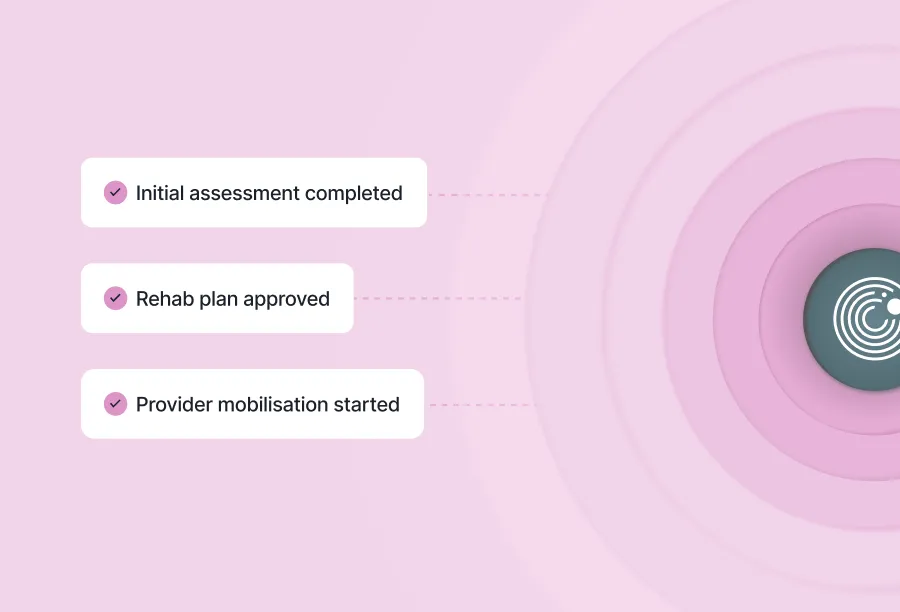
A lack of shared visibility makes it difficult to understand where a case truly stands. Actions, approvals, and clinical decisions may exist — but not in a single, reliable place.
Without a unified case view, teams spend unnecessary time reconciling updates instead of progressing outcomes. Confidence erodes when stakeholders cannot clearly see what’s been agreed, completed, or delayed.
Documentation and Reporting Challenges
Reporting remains one of the most time-consuming aspects of complex rehab. Progress summaries, outcome reports, and handover documentation are often recreated from scratch using manually assembled inputs.
This not only increases administrative burden but also leads to inconsistencies between what was planned, what was delivered, and what is ultimately reported.

Why Fragmentation Impacts Outcomes
When workflows are disconnected, decision-making slows. When records are incomplete, accountability becomes unclear. And when reporting is inconsistent, trust between stakeholders weakens.
Over time, these inefficiencies directly impact rehabilitation momentum — affecting both client experience and system-level confidence.
Opportunities for Structured Coordination
The biggest opportunity identified is not replacing clinical expertise — but supporting it with structure.Participants highlighted the need for:
- A single source of truth for each case
- Clear visibility of goals, actions, and decisions
- Consistent outputs that reflect real progress
Structured coordination enables teams to focus less on administration and more on outcomes.

Conclusion
Complex rehabilitation does not fail because of a lack of expertise — it struggles when systems are fragmented.
By working from one connected record, teams can reduce friction, improve clarity, and build confidence across every stage of the rehab journey.