Smart matching that protects practice, not just capacity.

Smarter allocation. Better cases. Stronger practice.

Oria CM is not a job board.

And Oria One is not a marketplace.

Smart Matching exists to protect professional standards, case quality, and caseload health.

Every referral entering Oria CM is structured across complexity, risk, clinical needs, location, urgency, and stakeholder context. Smart Matching uses this profile to support how cases are allocated, not to automate professional judgement.

The result: fewer misaligned referrals, fewer inappropriate assignments, and far less time spent unpicking cases that should never have landed where they did.


Professional woman in blazer talking on phone while working on laptop in an office.
Soft gradient background in light pink and white tones with subtle circular ripple patterns.

What Smart Matching actually does

Smart Matching supports allocation by continuously analysing

Case complexity and injury profile

Rehabilitation domains required

Geographical and travel constraints

Current caseload size and acuity

Continuity and conflict considerations

Emerging risk indicators

This allows Oria CM to:

Route cases to the most appropriate Case Manager

Avoid overload clustering

Support continuity of management

Flag mismatches early

Protect time for clinical reasoning instead of triage admin

Matching is not a one-off event.
It remains active across the life of the case.

Beyond allocation: active caseload intelligence

Smart Matching does not stop once a case is accepted.

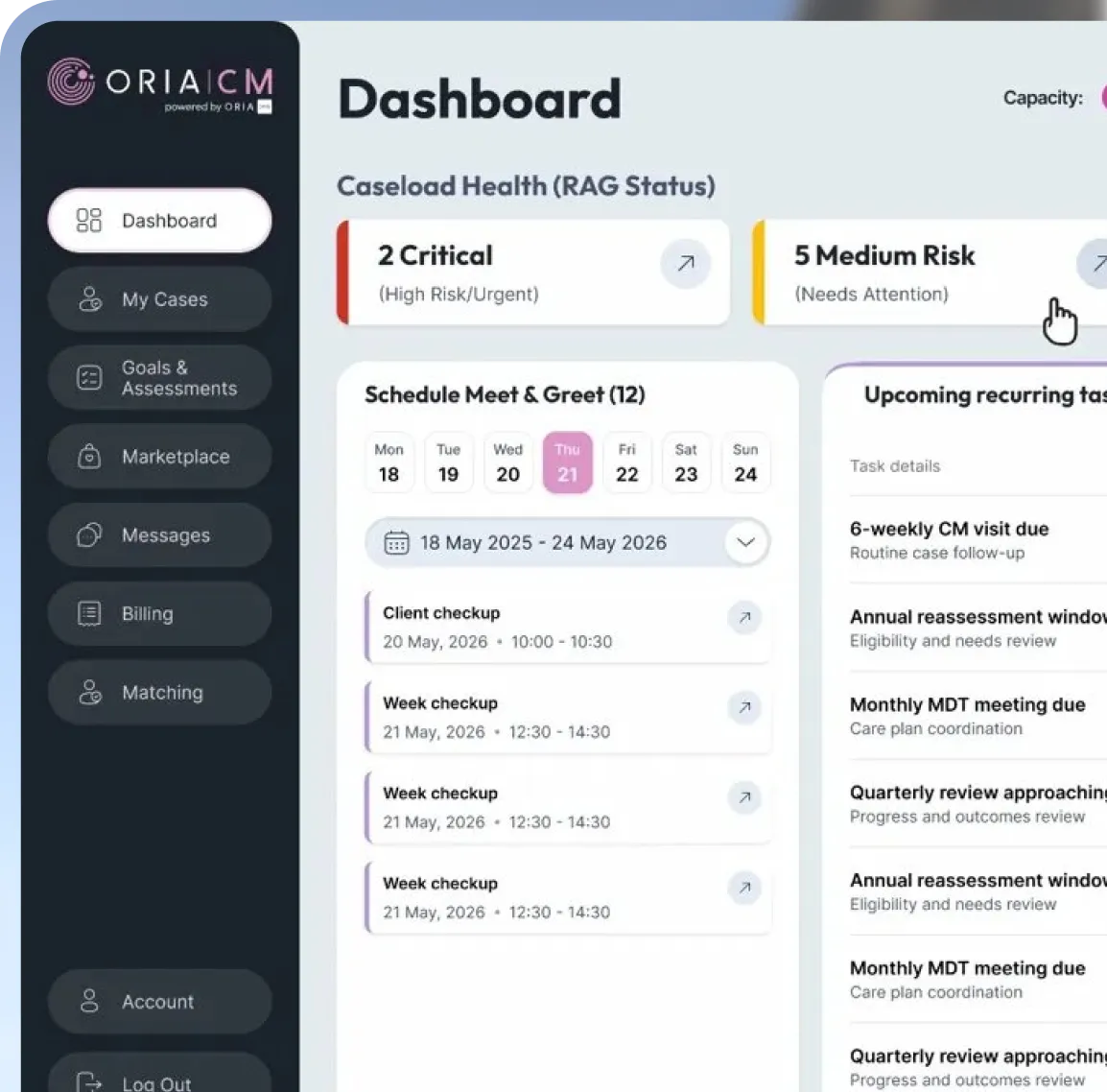
As cases evolve, the system continues to monitor:

Workload distribution

Emerging complexity

Stalled progression

Incident patterns

Review cadence

Delivery instability

This allows Oria CM to proactively:

Prompt review points

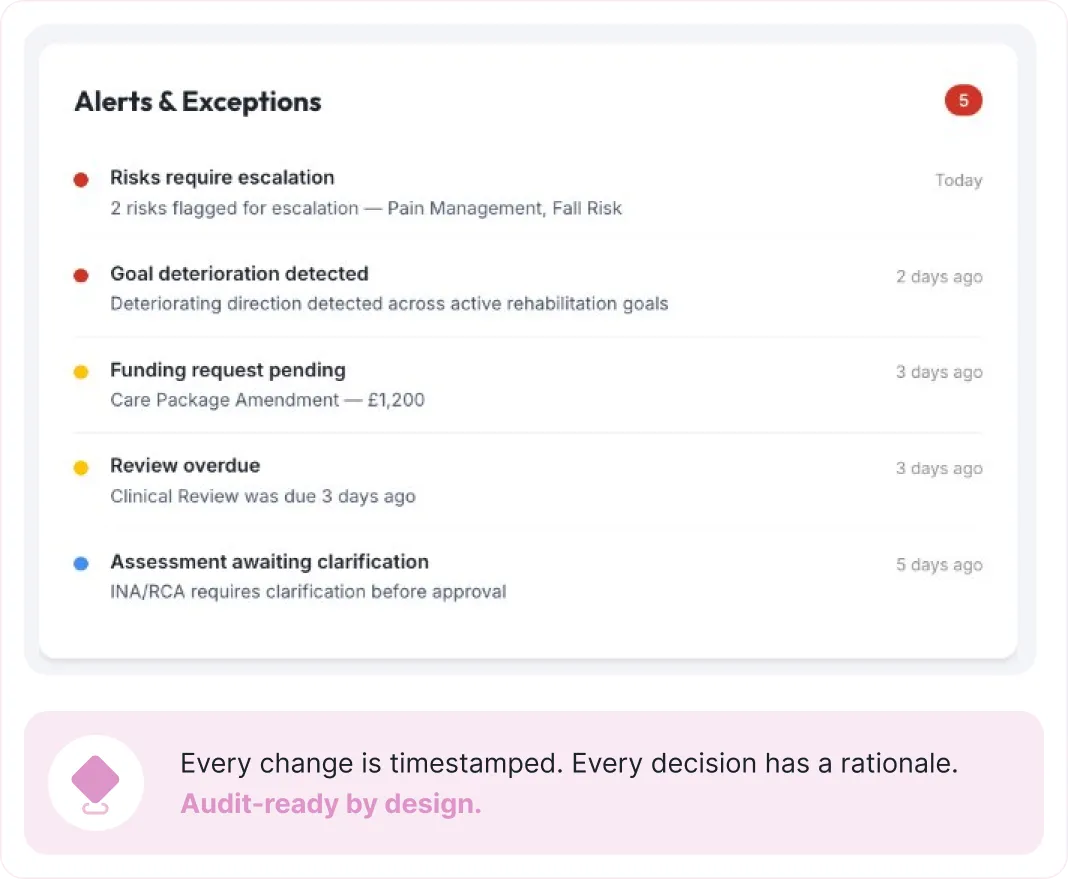
Surface risk before failure

Rebalance caseload pressure

Support continuity

Reduce handover failures

The system is not assigning.
It is governing the conditions under which professional judgement operates.

Why this matters to Case Managers

Because modern rehabilitation case management fails most often at the margins

When cases are poorly matched
When caseloads silently overload
When complexity creeps without visibility
When continuity breaks
When risk emerges after damage is done

Smart Matching gives Case Managers something the traditional model never has:

a live, system-level view of how work is distributed, how cases are behaving, and where pressure is building. So practice stays intentional.

Not reactive.

Defensible rehabilitation. Transparent cost. Fewer surprises.

Rehabilitation only works when it is structured, visible, and financially accountable.

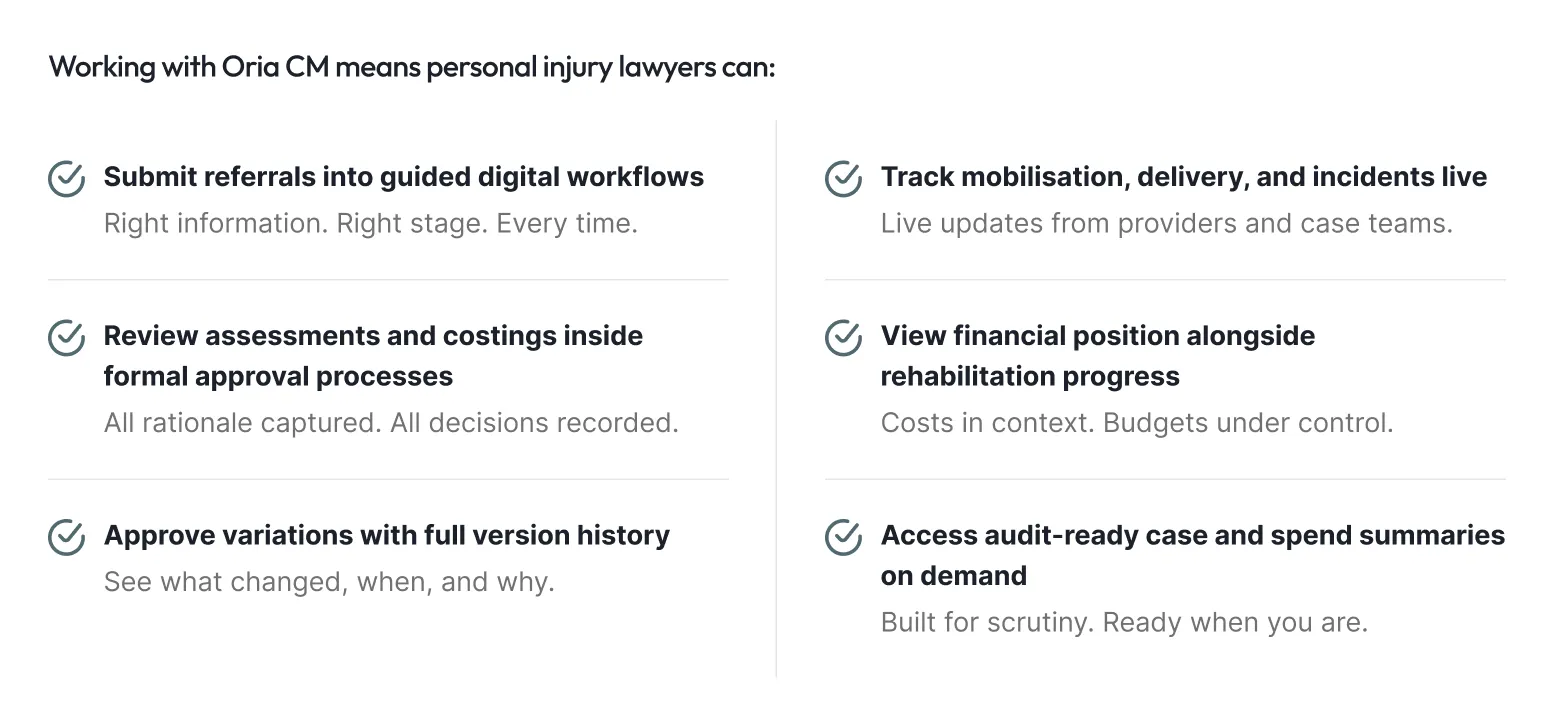
For personal injury lawyers, the challenge is not just coordinating rehabilitation. It is being able to evidence that recommendations were appropriate, spend was justified, and outcomes were being actively governed.

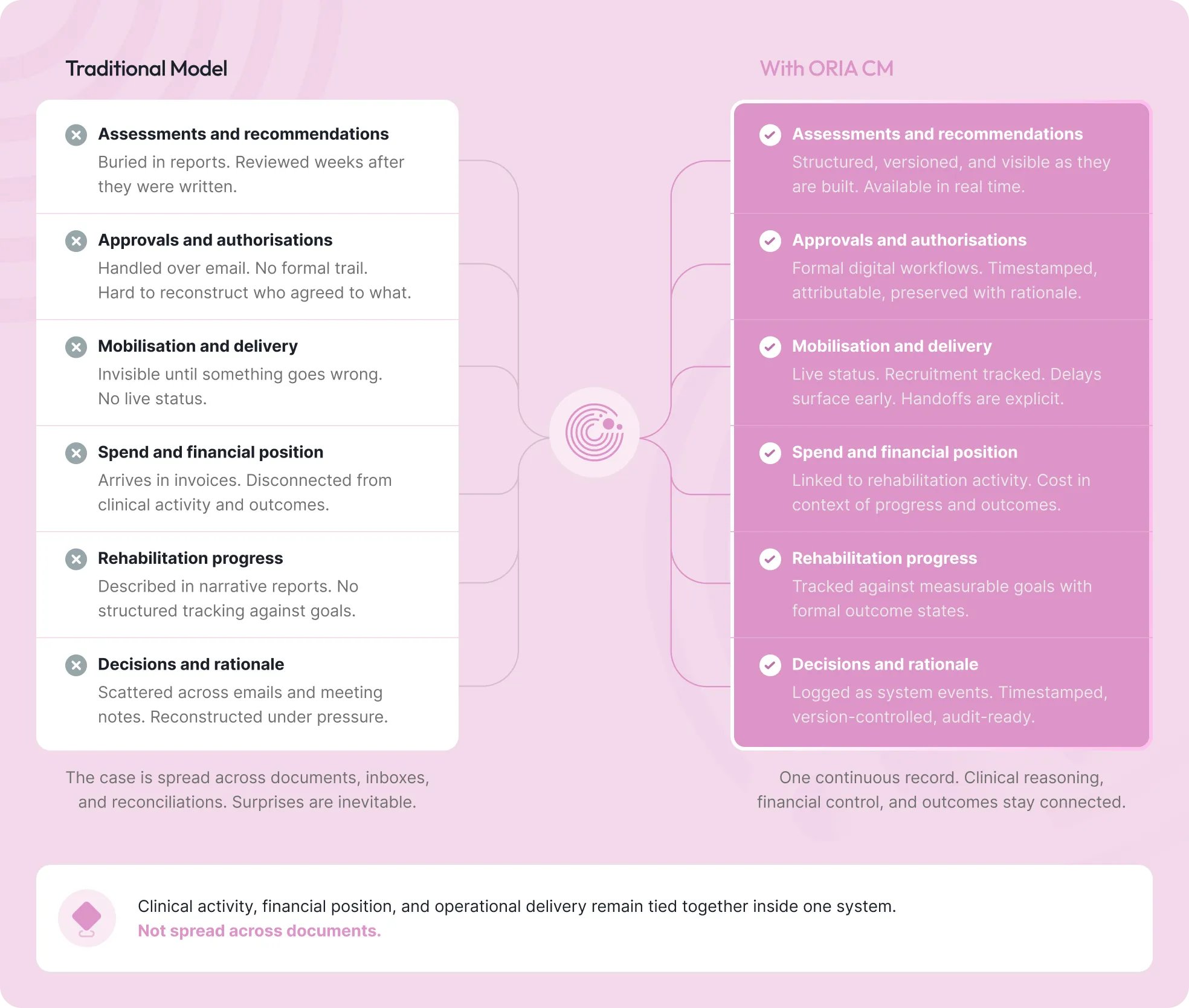
Traditionally, those answers live across reports, invoices, email threads, and reconciliations.

Oria CM changes that.

Woman in green blouse writing on paper while looking at a tablet at her office desk.

Delivered through Oria One, Oria CM operates rehabilitation case management inside a single live system

Where clinical reasoning, financials, approvals, delivery activity, and outcomes remain connected.

The case is not rebuilt later.
It exists in real time.

Financial clarity built into the case

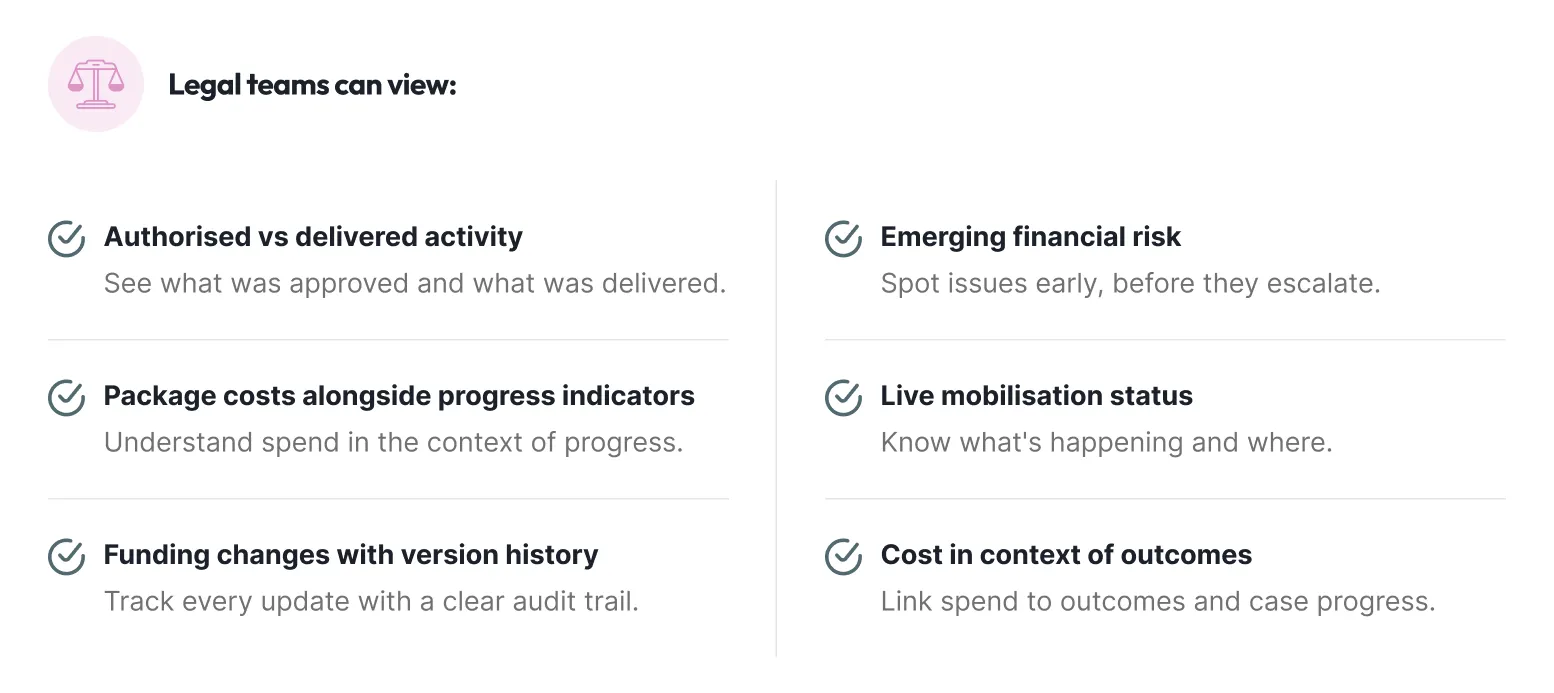
What this gives personal injury lawyers

Oria CM links rehabilitation recommendations to costings, approvals, and live delivery data.

This removes blind spots between what was approved, what is happening, and what is being billed.

Built for financial defensibility

Formal approvals and defensible costings

Assessments and recommendations move through structured approval workflows.

Costings are itemised, reviewable, and preserved with rationale.
When questions arise, the system already holds:

What was proposed

What was approved

When it changed

Who authorised it

What followed

No reconstruction. No interpretation battles.

Stronger evidence, lower exposure

Because Oria CM operates as a live system

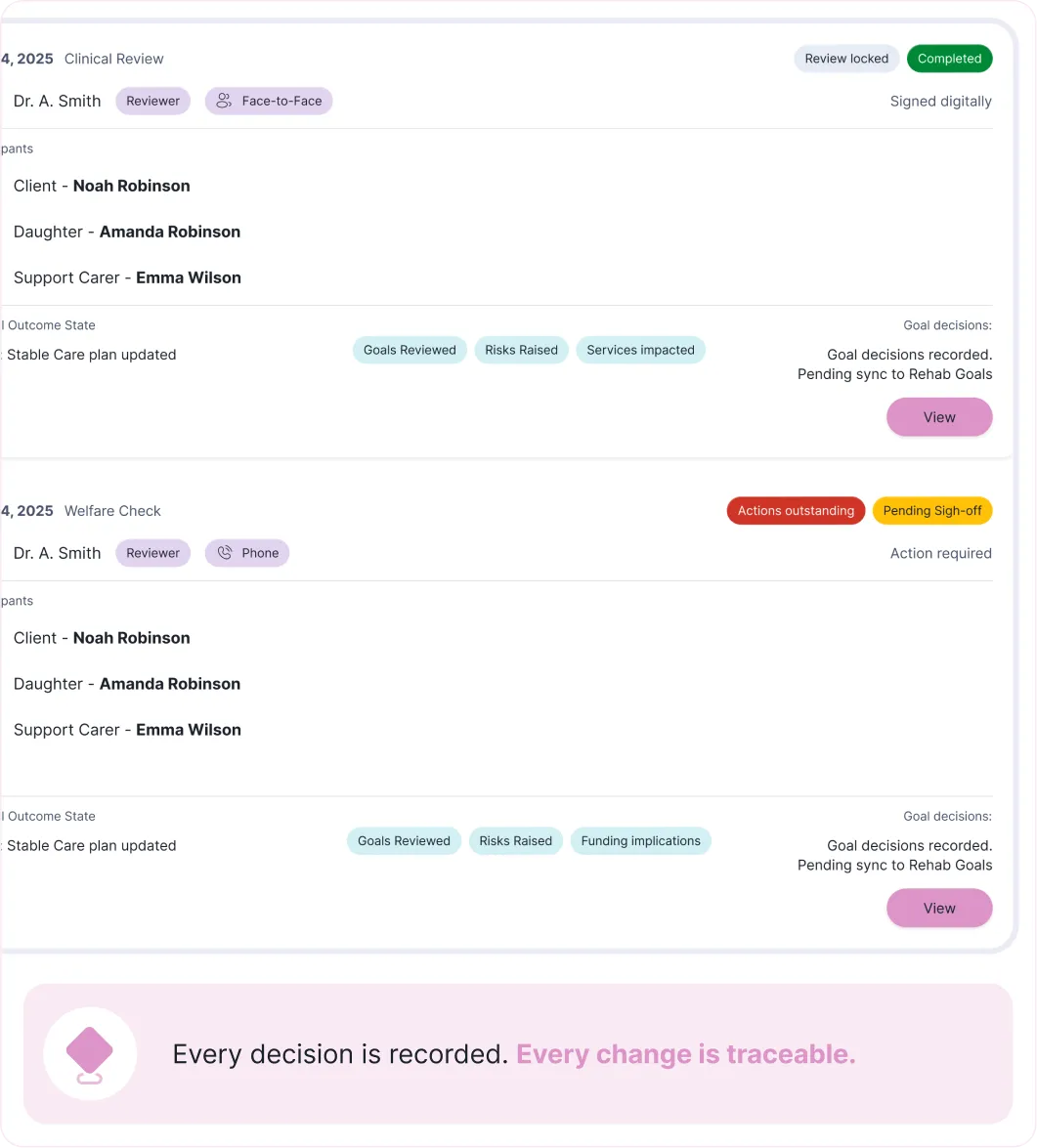
Decisions are timestamped
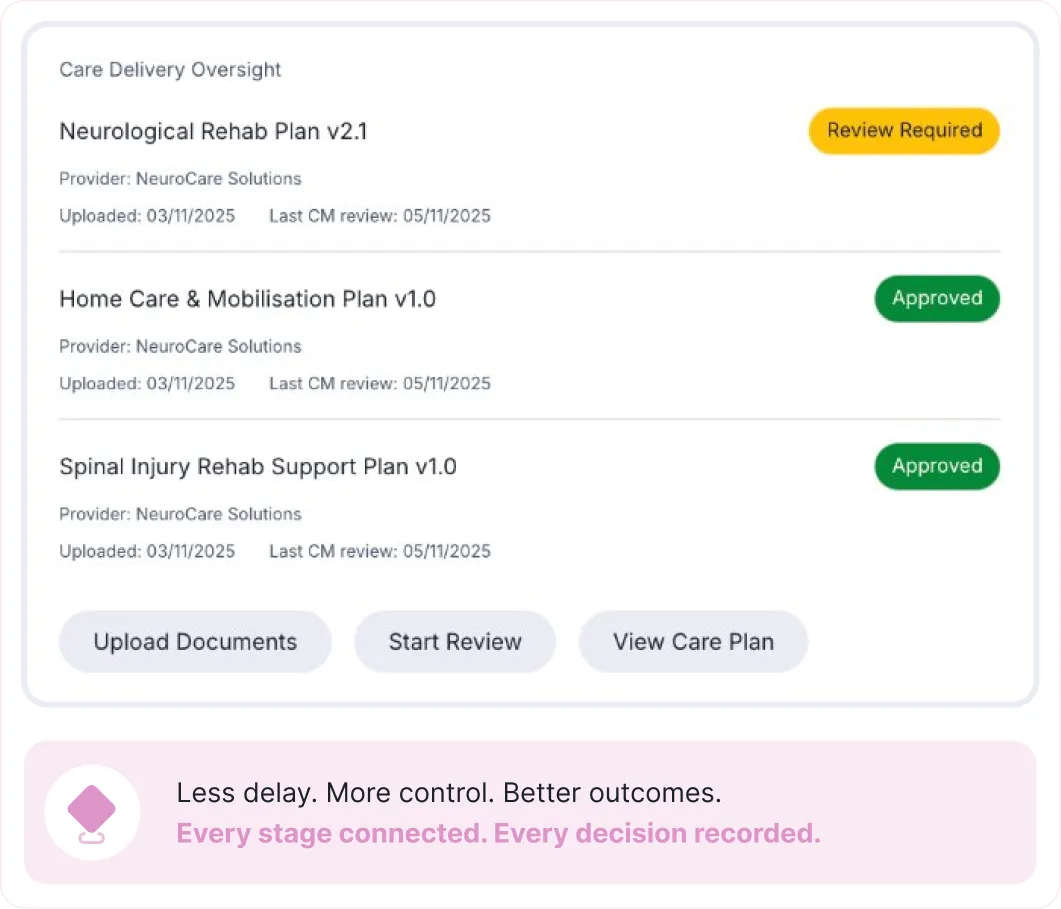
Documents are version-controlled
Actions are attributable
Financials are traceable
Outcomes are linked to plans

This creates a defensible narrative across both rehabilitation management and spend.
Reducing professional, legal, and financial risk.

Built for momentum

Faster, more controlled progression

Oria CM reduces the delays that typically slow cases by keeping every stage moving and connected.

Structured referrals

Right information in. Right stage from the start.

Clear assessment workflows

Standardised steps. No guesswork.

Formal approval states

Decisions recorded. Rationale preserved.

Live mobilisation visibility

See what's happening. Intervene early.

Continuous review cycles

Progress reviewed. Plans adjusted.

Fewer handoff failures. Less chasing. Clearer accountability.

The Result

Oria CM gives personal injury lawyers something traditional models cannot

A continuously accountable rehabilitation record where clinical reasoning, financial control, and outcomes remain connected.

Clearer spend

Costs are understood in the context
of progress and outcomes.

Defensible decisions

Every approval is recorded with
rationale and version history.

Live oversight

Real-time visibility across clinical
activity and delivery.

Stronger evidence. Fewer surprises.
Better outcomes for your clients.

Care review and welfare check records for Noah Robinson with status, goals, and action indicators.
Get Started

Rethink rehabilitation case management.

Underside of a modern cable-stayed bridge with a clear blue sky and an airplane contrail above.
Health dashboard showing caseload health with 2 critical and 5 medium risk cases, a schedule of meet and greet appointments for May 18-24, 2026, and a list of upcoming recurring tasks including CM visits, reassessments, and MDT meetings.