The operating system for modern Rehabilitation
Case Management.
Oria CM is not supported by software.
It is executed through it.
Oria One is the live environment Oria CM works inside.
It is where referrals arrive.
Where cases are built.
Where assessments are structured.
Where reviews are conducted.
Where decisions are formalised.
Where actions are generated.
Where delivery is monitored.
Where outcomes are evidenced.
This is not a document repository. It is an active rehabilitation system.



A system built for rehabilitation work
Structured referrals, not intake forms
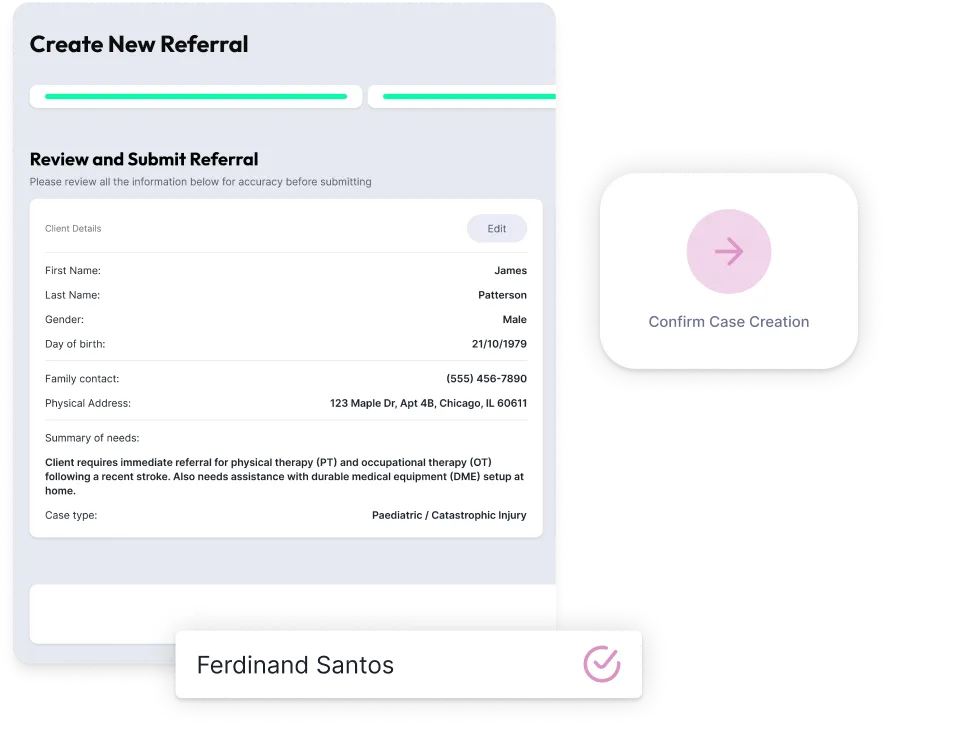
Referrals enter Oria CM as structured case objects, not emails or attachments.
Each referral captures injury profile, presenting needs, risk indicators, funding context, urgency markers and stakeholder permissions.
From submission, a referral becomes a live case record.
Not a file to be interpreted later.
A system entity that can be worked.

Role-based workspaces not shared inboxes
Case Managers operate live cases from a defined workspace.
Their environment brings together caseloads, assessments, reviews, decisions, risks and progression indicators in one system view.
Everything prioritised.
Everything sequenced.
Everything traceable.
See the current clinical and functional position at a glance.

Work moves through structured stages with clear sequencing and accountability.

Progress, risk and decisions are in real time.

Every action is recorded, rationalised and retained
for audit.

Structured assessments
and formal reviews
Assessments are built as structured system records that preserve professional reasoning while enabling consistency, oversight
and comparison.
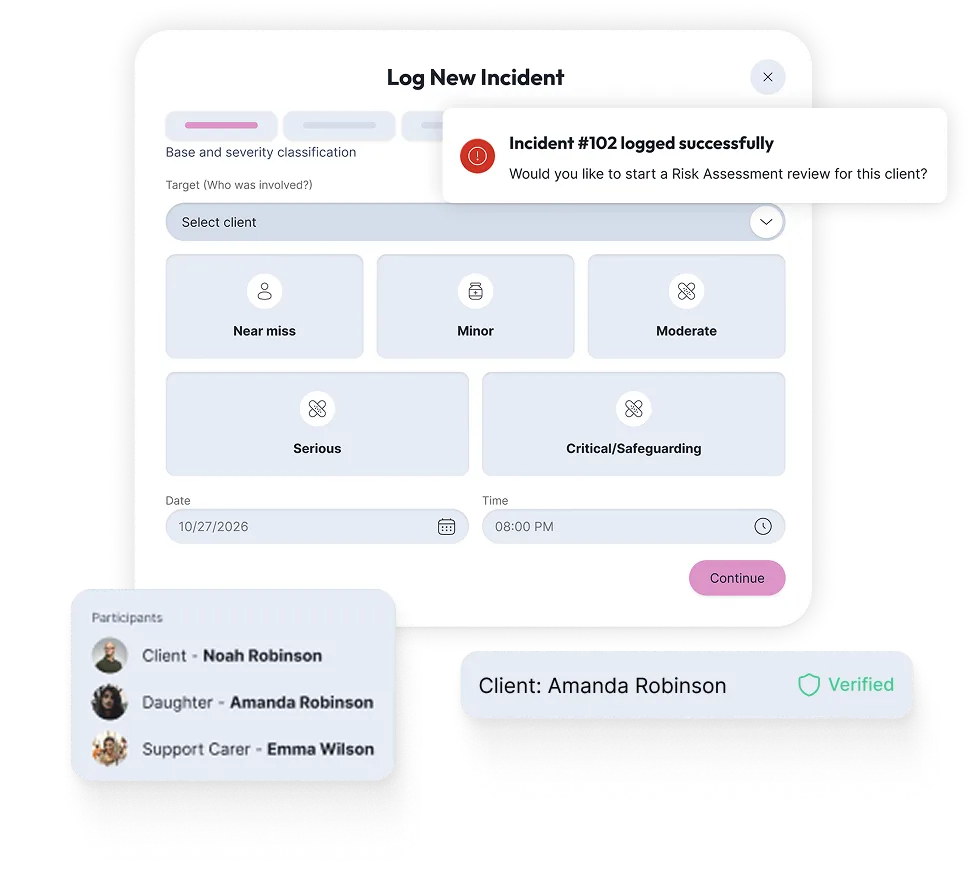
Reviews are not notes. They are system events.
Each review snapshots the case, records judgement, formalises decisions, updates progression and generates next-stage actions.
Nothing is overwritten.
Nothing disappears.
Rationale is preserved.
Decisions that
generate action
Professional decisions inside Oria CM do not stop
at documentation.
They initiate movement.
Reviews and recommendations can trigger coordination tasks, reassessments, delivery changes, follow-up reviews and escalation alerts.
This is where reasoning becomes operational reality.
Continuous
case intelligence
Each case maintains a live internal profile, showing not just what has happened, but what is happening and what is emerging.
Including progress trajectory, stalled objectives, instability signals, risk accumulation and milestone achievement.
This allows Case Managers to manage forward, not backward.
Visibility by design
Oria One does not produce updates.
It exposes the case.
Authorised stakeholders can view current position, recent reviews, active objectives, coordination status, emerging risks and documented outcomes without chasing reports or reconstructing histories.
The system itself becomes the record.
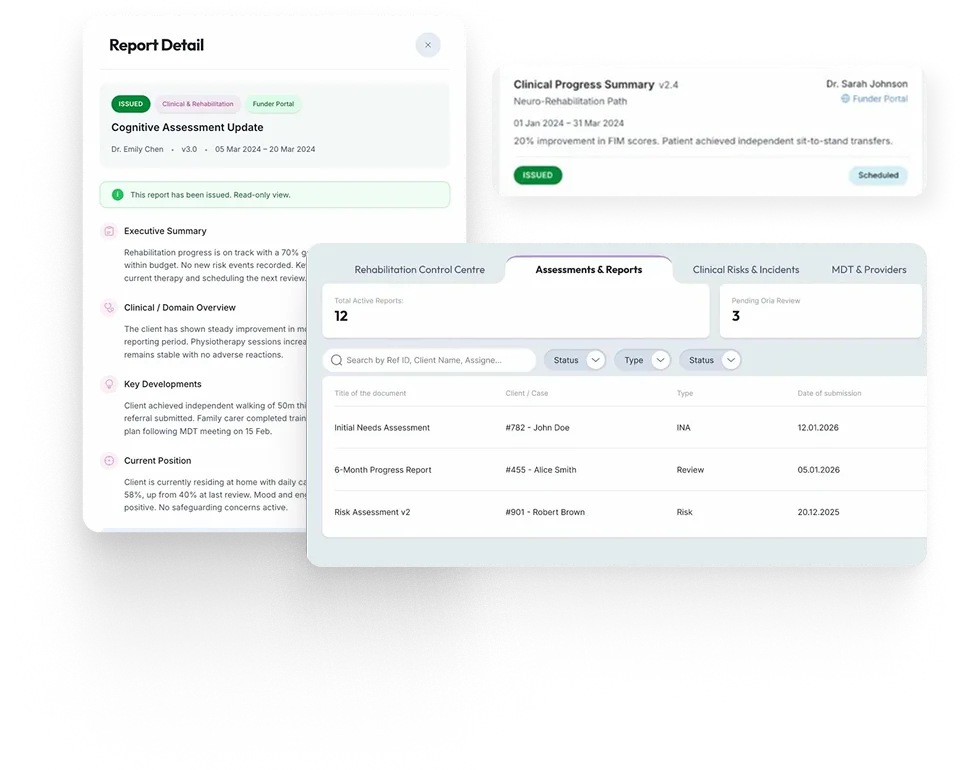
Case memory
and reporting
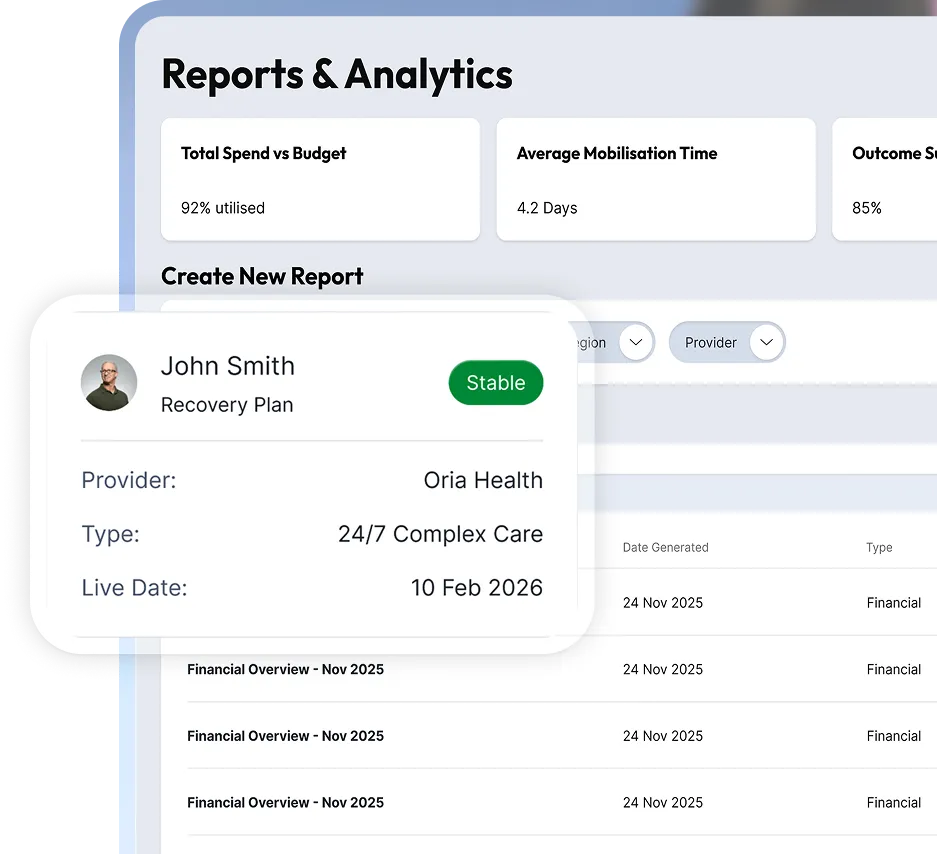
Cases inside Oria CM accumulate.
The system preserves early referrals, first assessments, evolving plans, successive reviews, decision lineage and outcomes achieved. Reporting is not reconstruction.
It is extraction.
Formal outputs are generated directly from live case data.
What this allows
Oria CM to be
Not better reports. Better rehabilitation systems.
Fewer handover failures
Reduced professional exposure
Clearer accountability
Faster mobilisation
Live oversight
Defensible decisions
Measurable progression
Consistent in reporting
Join the ecosystem.
Work from one record.